
Fighting Imposter’s Syndrome as a Manager (a personal reflection)
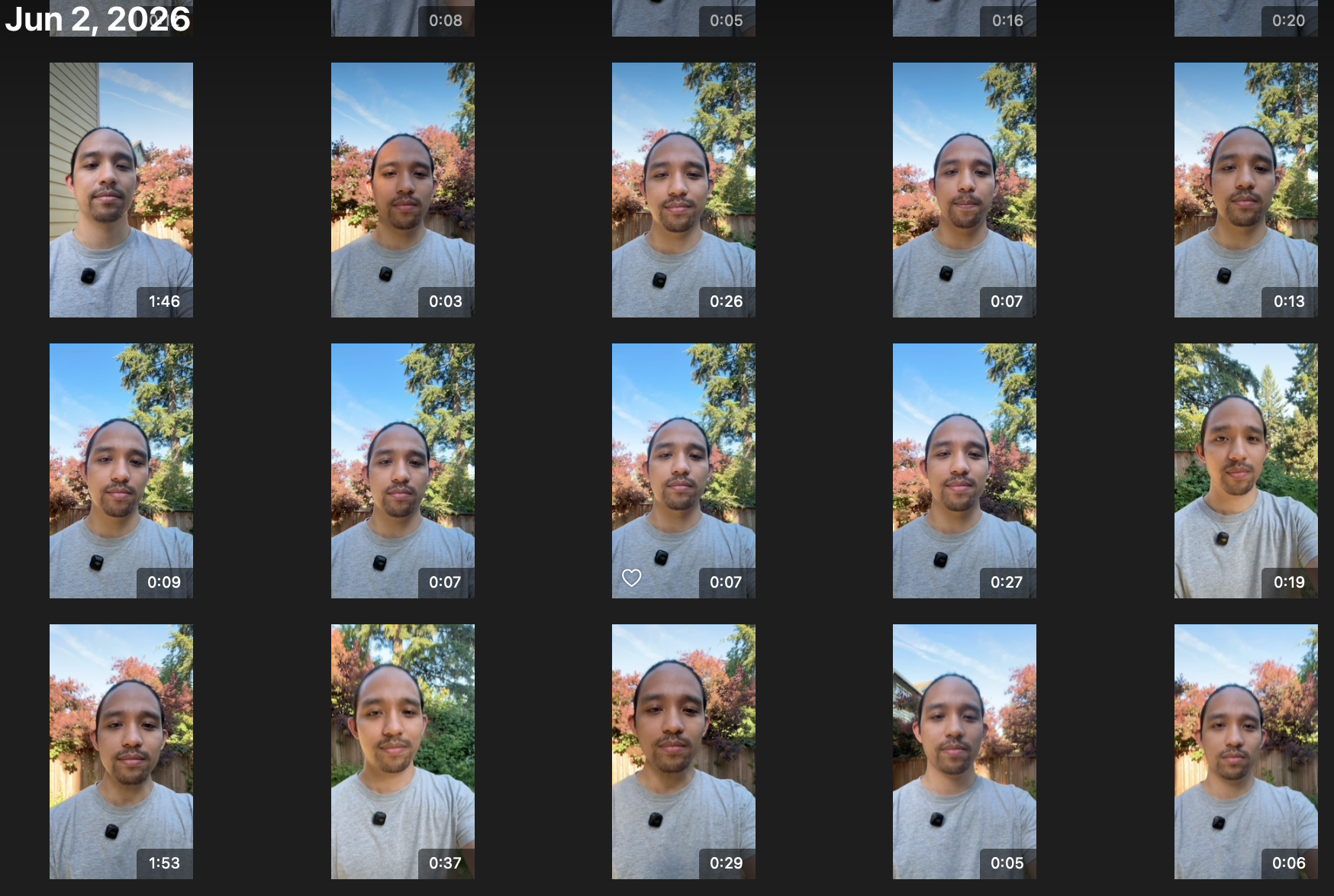
My Photos folder shows the dozens of video takes that I took before I felt like I had made a perfect video. Yay, perfectionism!
In the last week, I’ve been struggling with my own kind of imposter syndrome: am I really an efficient manager if I’m only doing it part-time right now? It’s been a challenge to manage one artist efficiently while working a full-time job and being a full-time student, but I still try to make do with what I can. Realistically, while I would personally advocate that anyone can start a career in artist management, the responsibilities that come with it are best handled in a full-time capacity. That’s how much work and attention your artists (and this role) will need from you. So what have I been doing lately to address it? I’ve been rereading the required readings from my Berklee days for my artist management course, Artist Management for the Music Business by Paul Allen (link here). Has this been helping me feel like I’ve been doing enough? Not at all. In fact, it’s admittedly been making my imposter syndrome feel worse…and I think that’s absolutely exciting.
As much as I thought I was learning when I first started my management company, I learned the hard way through trial and error. From my continued reading, I can tell I’m only scratching the surface of artist management. I honestly skipped the book when I was taking the course because I spent much more time practicing what I learned from the course’s instruction than reading the required textbooks (I know I’m not the only one!). I know enough about myself to realize I have an ego and sometimes struggle to accept when I’m doing something wrong. At the same time, I’m a dedicated lifelong learner who loves learning, and I have enough curiosity to be ecstatic when I’m told there’s so much more left to learn in a field I’m interested in pursuing. Isn’t it an exciting feeling that the reason the quality of your work isn’t quite where it needs to be yet is that you still have more to learn and experience? To reference a popular scene from the timeless anime Dragon Ball Z, it’s like finding out that you’re not even at your final form. That you have levels beyond where you’re at now that you’ll eventually reach, as long as you continue learning.
If you’re as paranoid about perfection as I am and have done your research on imposter syndrome, you understand that its effects are mostly in your mind and that most proposed solutions focus on reflection and seeing things differently. As scientifically rigorous as the research I read is, at the end of the day, I’m still an impatient person who’s struggling to move past the feeling & make progress toward my goal. So what do I do from here?
I’ve spent many years working through imposter syndrome in my own way, and I have three go-to approaches: I either fight it, work alongside it, or reframe it. I can’t say that these ways work for everyone, but I can’t think of any other ways that work for me.
Call me a stubborn military veteran, but I often choose to fight imposter syndrome, and the way that I fight it is by jumping straight into situations that challenge it. A fitting phrase for this is “fake it until you become it.” After starting my management company, I had never booked shows on anyone's behalf, and I sure didn’t feel qualified to do the job. I really shouldn’t have been coordinating artist bookings, since that’s a booking agent’s role, but we were working with what we had at the time. So what did I do? I created a new email address dedicated to bookings and started sending cold emails to event promoters and venue staff. I would be extremely nervous about sending the emails, but I volunteered to put myself in a position where it was needed to help my artists. I still feel a bit of imposter syndrome when booking artists nowadays, but I can now say I also feel a bit more qualified to book them until we get a booking agent. Additionally, this experience has given me an intimate look at what really goes into a booking agent's job. As I move forward in my career and work with booking agents, I can be much more mindful of the level of work they do, and I need to make sure I truly treat team members with the respect and appreciation they deserve.
For my second approach, I would work alongside the sensation of imposter syndrome. I wouldn’t ignore it; I would acknowledge it and take action anyway. Working alongside my imposter syndrome usually meant that I would either go out to learn or rely on others with much more experience than I do to handle the task I’m dealing with. In my scenario of not feeling competent enough as a manager, I would read or consume content to refresh my memory of artist management (like I started doing with the book), or I would talk with fellow managers or professionals to ask for guidance. It’s easier to admit that I’m experiencing imposter syndrome (and to seek knowledge or help) than to jump into a situation where I need to overcome it blindly, just as long as I have the time & space to learn.
And finally, my last approach to tackling imposter syndrome is to reframe how I see the situation, and I can do that in as many creative ways as I can come up with. Taking the example I mentioned about sending cold emails to event promoters and venue staff, I would freeze up at the thought of doing something as impactful as booking shows for my clients, because I would worry that I might mess it up. Wondering what kind of reframing I came up with to work through it? I had sat down and taken a moment to have a conversation with myself, mentally and emotionally, and some thoughts gave me peace of mind about sending the emails. One thought was that, by sending a cold email to an event promoter, they could become a helpful connection and a possible professional relationship that’ll help me work with my clients. Who knows, they might even become a friend! Every friend you’ve ever had was once a stranger. Truthfully, I really was only sending an email, not robbing a bank. Most of all, more than anything else in the world, I want my artist to be successful, and by doing so, I am helping them get to where they need to be. That last one usually really motivates me.
This is how I usually approach my experiences with imposter syndrome. Now that I’m face-to-face with it today, I’ll continue reading this book that challenges me and what I know so I can feel less of an imposter.
As a manager, I want to do the best for my artists and for myself. I’m convinced I’m passionate about what I do, but the thought that I’m not doing enough or not qualified to manage artists comes up so many times in a week. It’s something we all work through in our careers, so you’re not alone! If you ever find yourself experiencing imposter syndrome in your management career, talk to the next manager that you meet (or join our newsletter for managers & even join our very own community of artist managers on Discord). I can assure you that we all feel the same way. We all feel like imposters, but you can’t deny that we’re passionate about the music business & our artists. That’s what’s going to get us through, every time.